



Concept Notes (Deep Explanation + Examples)
🌟 1️⃣ Introduction to Probability
Probability measures how likely an event is to occur.
If you toss a coin once, possible outcomes = {H, T}.
Favorable outcomes for Head = 1.
Hence

So,

👉 Range: 0 ≤ P(E) ≤ 1
- P(E)=0 → impossible
- P(E)=1 → certain
🎲 2️⃣ Types of Probability
- Theoretical: Based on mathematical reasoning.
- Experimental: Based on actual trials.
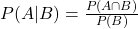
- Conditional: When event B has already happened:
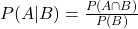
🧩 Example:
A bag has 3 red & 2 blue balls. One ball drawn → red. What’s the chance of blue next (without replacement)?

🔢 3️⃣ Permutations and Combinations
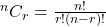
Permutation (Arrangement – Order Matters):

🧮 Example:
How many 3-digit numbers can be formed from 1, 2, 3, 4 without repetition?

So 24 numbers possible.
Combination (Selection – Order Does Not Matter):

🧮 Example:
Selecting 2 students from 4:

Hence 6 ways.
🧮 4️⃣ Relation Between P and C

🌐 5️⃣ Law of Total Probability
If B₁, B₂, … Bₙ are mutually exclusive and exhaustive events of S, then

🧭 6️⃣ Bayes Theorem (Proper LaTeX Example)
Used to update probabilities when new information is known.

Example:
A factory has 3 machines A, B, C producing 20%, 30%, 50% of items respectively.
Defective rates are 2%, 3%, and 4%.
Find the probability that a defective item came from C.
Given:

Using Bayes Theorem:

Substitute values:

Simplify:

Result:

✅ Hence, there’s a 60% chance that a defective item came from Machine C.
🧠 7️⃣ Real-World Engineering Applications
- Computer Science: AI classification, network failure probability
- Physics: Random motion of particles
- Chemistry: Molecular collision rates
- Electronics: Noise analysis in semiconductors
- Data Analytics: Spam detection, prediction models
🧩 Diagram (description): Three machines A, B, C → each feeds items → some reach a “defective” bin → arrows show reverse probability flow from defect back to machine (C|D).
⚙️ Formulas (Plain LaTeX)






🔟 10 MCQs (ECET + GATE Hybrid)
1️⃣ A coin is tossed twice. Probability of getting exactly one head is
A) 1/4 B) 1/2 C) 3/4 D) 1/3
2️⃣ Number of ways to arrange “MATH” is
A) 12 B) 24 C) 6 D) 18
3️⃣  equals
A) 21 B) 35 C) 42 D) 14
4️⃣ Probability of getting sum 7 when two dice are rolled is
A) 1/12 B) 1/8 C) 1/6 D) 1/18
5️⃣ If P(A)=0.4, P(B)=0.5 and A,B independent, then P(A ∩ B)=?
A) 0.2 B) 0.1 C) 0.9 D) 0.5
6️⃣ Number of ways to select 2 persons out of 10 is
A) 90 B) 45 C) 20 D) 100
7️⃣ If P(A)=0.7 and P(B|A)=0.5, then P(A ∩ B)=?
A) 0.3 B) 0.35 C) 0.5 D) 0.2
8️⃣ For mutually exclusive events A and B, P(A ∪ B)=
A) P(A)+P(B) B) P(A)–P(B) C) P(A)×P(B) D) None
9️⃣ Bayes theorem is applicable for
A) Independent events B) Mutually exclusive C) Dependent D) Random
🔟 If 4 coins are tossed, probability of getting 2 heads is
A) 3/8 B) 6/16 C) 3/16 D) 1/2
✅ Answer Key
Q No | Answer
1 | B
2 | B
3 | B
4 | A
5 | A
6 | B
7 | B
8 | A
9 | C
10 | D
🧠 MCQ Explanations
1️⃣ (HH, HT, TH, TT) → 1 head in 2 cases → 2/4 = 1/2.
2️⃣ 4! = 24 arrangements.
3️⃣  .
.
4️⃣ Sum 7 has 6 cases → 6/36 = 1/6.
5️⃣ Independent →  .
.
6️⃣  .
.
7️⃣  .
.
8️⃣ Mutually exclusive →  .
.
9️⃣ Bayes → Dependent events.
10️⃣  .
.
🎯 Motivation (ECET 2026 Specific)
Probability appears in ECET every year — in Maths and CSE (randomization, network reliability).
Mastering it gives sure 6–8 marks.
Keep revising 1 formula daily and your rank skyrockets 🚀.
📲 CTA (Fixed)
Join our ECET 2026 CSE WhatsApp Group for daily quizzes & study notes:
👉 https://chat.whatsapp.com/GniYuv3CYVDKjPWEN086X9