



A lite explanation of why this topic is important for ECET
Satellites are the backbone of modern communication systems – from TV broadcasting to GPS, weather monitoring, and defense applications. For ECET 2026, questions on orbital mechanics, satellite frequency bands, link design, and coverage are common because they test both basic understanding + application of formulas. Learning satellite basics helps you score quick marks in the Advanced Communication section.
📘 Concept Notes
1. What is a Satellite?
- A satellite is an artificial body placed in orbit around Earth for communication, navigation, weather monitoring, etc.
- Communication satellites act as repeaters: they receive signals, amplify them, and retransmit to other locations.
2. Orbits of Satellites
- LEO (Low Earth Orbit): 500–2000 km, used for imaging, mobile communication.
- MEO (Medium Earth Orbit): 2000–35,000 km, used for GPS.
- GEO (Geostationary Earth Orbit): 35,786 km, satellite appears fixed over Earth, used for TV & communication.
Example: A GEO satellite takes 24 hours to complete one revolution → appears stationary relative to Earth.
3. Satellite Components
- Transponder: Receives uplink signal, changes frequency (to avoid interference), amplifies, and retransmits as downlink.
- Antenna system: For wide coverage (global beams) or focused coverage (spot beams).
- Power system: Solar panels + batteries.
- Telemetry & control: For monitoring satellite health and adjusting orbit.
4. Frequency Bands in Satellite Communication
- L-band (1–2 GHz): GPS, mobile communication.
- C-band (4–8 GHz): TV broadcasting.
- Ku-band (12–18 GHz): DTH TV.
- Ka-band (26–40 GHz): High-speed internet.
5. Link Design
- Uplink: Earth → Satellite (uses higher frequency).
- Downlink: Satellite → Earth (uses lower frequency).
- Free space path loss (FSPL): Signal power decreases with distance.
6. Applications of Satellites
- DTH broadcasting
- GPS navigation
- Weather forecasting
- Military surveillance
- Internet & 5G backhaul
⚙️ Formulas
- Orbital time period:
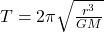
Orbital velocity:

Free space path loss:

In dB:
(where d in km, f in MHz)
Effective isotropic radiated power:

🔟 10 MCQs
Q1. The height of a geostationary satellite above Earth’s surface is approximately:
a) 1000 km
b) 10,000 km
c) 35,786 km
d) 100,000 km
Q2. The time period of a geostationary satellite is:
a) 12 hours
b) 18 hours
c) 24 hours
d) 48 hours
Q3. Which orbit is commonly used for GPS satellites?
a) LEO
b) MEO
c) GEO
d) Polar orbit
Q4. If a satellite is at 36,000 km and Earth’s radius is 6370 km, find its orbital velocity (use  ).
).
Q5. Why is uplink frequency higher than downlink frequency?
a) Because Earth stations can transmit with higher power
b) To reduce satellite antenna size
c) To avoid interference
d) Both (a) and (c)
Q6. C-band satellites operate approximately in:
a) 1–2 GHz
b) 4–8 GHz
c) 12–18 GHz
d) 26–40 GHz
Q7. Free space path loss increases with:
a) Lower distance and frequency
b) Higher distance and frequency
c) Higher distance but lower frequency
d) Independent of both
Q8. If distance = 36,000 km and frequency = 6 GHz, find FSPL in dB.
Q9. A transponder’s role is to:
a) Amplify and forward signal
b) Change frequency
c) Provide satellite power
d) Both (a) and (b)
Q10. Which band is mostly used in DTH TV broadcasting?
a) L-band
b) C-band
c) Ku-band
d) Ka-band
✅ Answer Key
| Q No | Answer |
|---|---|
| Q1 | c |
| Q2 | c |
| Q3 | b |
| Q4 | 3.07 km/s |
| Q5 | d |
| Q6 | b |
| Q7 | b |
| Q8 | 196 dB |
| Q9 | d |
| Q10 | c |
🧠 Explanations
- Q1: Geostationary orbit ≈ 35,786 km above Earth.
- Q2: GEO satellites take 24 hrs (same as Earth rotation).
- Q3: GPS satellites are in MEO.
- Q4:
 .
. - Q5: Higher uplink frequency reduces antenna size and interference → correct answer is both.
- Q6: C-band lies between 4–8 GHz.
- Q7: FSPL increases with both distance and frequency.
- Q8:
 .
. - Q9: Transponder changes frequency + amplifies → both.
- Q10: DTH broadcasting uses Ku-band (12–18 GHz).
🎯 Motivation / Why Practice Matters
Satellite communication is a scoring area in ECET 2026 because:
- Most formulas are direct application-based.
- Questions test basic concepts like orbit, frequency bands, FSPL.
- With practice, you can solve these within 30 seconds → huge time saver in competitive exam.
📲 CTA
👉 Join our WHATSAPP group for ECET 2026 updates and discussions:
🔗 Click Here

