



Concept Notes (Deep Explanation + Examples)
🌍 Introduction
Surveying is all about measuring distances, angles, and elevations to represent the Earth’s surface accurately.
But even with the best instruments and care, errors are unavoidable.
Hence, understanding types of errors and their adjustments is crucial for every ECET aspirant.
⚖️ What Are Errors?
Error is the difference between the true value and the measured value of a quantity.
No measurement is perfectly accurate due to limitations in instruments, observers, and environmental conditions.

📏 Types of Errors in Surveying
1. Gross Errors (Blunders)
These are human mistakes due to carelessness.
- Reading wrong numbers
- Wrong booking of observations
- Using wrong instrument settings
🧱 Example:
In chain surveying, writing 27.5 m instead of 37.5 m is a gross error.
Prevention:
Rechecking, proper supervision, and systematic recording.
2. Systematic Errors
These occur due to instrumental defects, environmental changes, or observer’s habits — and follow a definite law.
🧩 Examples:
- Tape length not standard (too long/short)
- Temperature changes affecting tape length
- Incorrect leveling of the instrument
Systematic errors can be predicted and corrected mathematically.
Field Example:
If the tape is 0.02 m too short for 20 m, every measured length will be slightly more than the true length.

3. Random (Accidental) Errors
These occur due to uncontrollable causes — very small variations in observation or judgment.
They follow the laws of probability and can be reduced by taking mean values.
🧮 Example:
Small vibration or reading difference while bisecting with a theodolite.
🧠 Classification of Errors (ECET Focus Table)
| Type | Cause | Effect | Remedial Action |
|---|---|---|---|
| Gross | Human Mistake | Very large | Recheck readings |
| Systematic | Instrument/Environment | Predictable | Apply correction |
| Random | Uncontrollable | Small | Take mean values |
⚙️ Principles of Error Adjustment
The goal of adjustment is to ensure most probable value of an observation — the one most likely to be correct.
1. Method of Least Squares
Used in advanced surveying (Triangulation, GPS).
It minimizes the sum of squares of residuals (errors).

Residuals are adjusted such that:
where vvv = residuals (errors in observed values)
📐 Laws of Accidental Errors
- Equal Probability Law:
Positive and negative errors are equally likely. - Law of Compensation:
Small errors tend to cancel out; large errors seldom occur. - Most Probable Value (MPV):
Mean of all equally precise observations.

🏗️ Real-World Example (Site Work)
In a leveling survey, suppose multiple staff readings are taken to determine RL (Reduced Level).
Due to minor parallax or eye errors, readings may differ slightly (say 1.245, 1.247, 1.243).
By taking the mean, we get the most probable value — reducing random error influence.
🧾 Error Corrections in Chain Surveying
- Correction for Tape Length:

Correction for Temperature:

Correction for Pull:
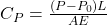
Correction for Sag:

(Symbols explained in formula section below)
3️⃣ ⚙️ Formulas (Plain LaTeX Only — No Boxes)



4️⃣ 🔟 10 MCQs (GATE + ECET Mix)
- Error due to temperature change is a type of:
A) Gross error
B) Systematic error
C) Random error
D) Personal error - If a tape is too long, the measured distance will be:
A) True
B) Too short
C) Too long
D) Unaffected - The most probable value of observations is:
A) Minimum value
B) Maximum value
C) Arithmetic mean
D) Median - The correction for sag is always:
A) Positive
B) Negative
C) Zero
D) Depends on slope - The principle of least squares states that:
A) Sum of errors = 0
B) Sum of squares of errors is minimum
C) Errors are equal
D) None of the above - Random errors follow:
A) Definite pattern
B) Probability law
C) Systematic variation
D) Observer’s carelessness - If the tape is 0.02 m short for 20 m, and measured distance is 100 m, the true length is:
A) 99.90 m
B) 100.10 m
C) 99.80 m
D) 100.20 m - Sag correction depends mainly on:
A) Pull
B) Weight of tape
C) Both A and B
D) Temperature - The correction for pull is:
A) Additive if pull > standard pull
B) Subtractive if pull > standard pull
C) Always additive
D) Always subtractive - Mean of all equally precise observations gives:
A) True value
B) Most probable value
C) Least value
D) Error value
5️⃣ ✅ Answer Key (WordPress Table Format)
Q.No Answer
1 B
2 B
3 C
4 B
5 B
6 B
7 B
8 C
9 A
10 B
6️⃣ 🧠 Explanations (Step-by-Step)
1️⃣ Temperature Error – Systematic (B)
Changes in temperature cause tape expansion/contraction — a systematic effect.
2️⃣ Tape Too Long – Measured Distance Too Short (B)
If the tape is longer than standard, each chain is slightly longer → actual distance is shorter.
3️⃣ Most Probable Value – Arithmetic Mean (C)
Taking mean reduces random errors — follows probability law.
4️⃣ Sag Correction – Negative (B)
Sag causes measured length to be more → correction is subtracted.
5️⃣ Least Squares – Sum of Squares Minimum (B)
Used for error adjustment in triangulation and GPS data.
6️⃣ Random Errors – Probability Law (B)
They are unpredictable but statistically follow Gaussian distribution.
7️⃣ Tape Correction (B)
Hence true length = 100.10 m (B).
8️⃣ Sag Correction – Pull & Weight (C)
Both tension and weight affect sag.
9️⃣ Pull Correction (A)
If pull > standard pull → tape stretches → measured length smaller → add correction.
10️⃣ Mean Value = Most Probable Value (B)
Reduces accidental errors, giving reliable results.
7️⃣ 🎯 Motivation / Why Practice Matters (ECET 2026 Civil)
In ECET Civil, Surveying is a sure-shot scoring area — especially “Errors and Adjustments.”
These questions appear every year because they test your conceptual clarity and practical understanding.
Once you master these corrections and error principles, even tough numerical questions become easy.
Stay consistent — one topic daily builds massive confidence before ECET 2026!
8️⃣ 📲 CTA
Join our ECET 2026 Civil WhatsApp Group for daily quizzes & study notes:
👉 https://chat.whatsapp.com/GniYuv3CYVDKjPWEN086X9