



Why This Topic is Important for ECET
Hydraulic turbines are a core subject in Hydraulics & Fluid Mechanics, directly applied in hydropower plants. In ECET exams, questions come from types of turbines, efficiencies, governing, specific speed, and velocity triangles. Mastering this ensures easy scoring + practical knowledge for future engineering applications.
📘 Concept Notes
🔹 What is a Hydraulic Turbine?
A hydraulic turbine is a rotating machine that converts water energy (potential/kinetic) into mechanical shaft work. This shaft work is later converted into electrical energy by generators.
🔹 Classification of Hydraulic Turbines
- Based on Energy Conversion:
- Impulse Turbine: Uses only kinetic energy of water.
Example → Pelton Wheel. - Reaction Turbine: Uses both pressure & kinetic energy.
Examples → Francis Turbine, Kaplan Turbine.
- Impulse Turbine: Uses only kinetic energy of water.
- Based on Flow Direction:
- Radial flow (inward/outward)
- Axial flow
- Mixed flow
- Based on Head of Water Supply:
- High head (>250 m) → Pelton turbine
- Medium head (60–250 m) → Francis turbine
- Low head (<60 m) → Kaplan turbine
🔹 Main Components of a Turbine
- Nozzle: Directs water jet (Pelton).
- Runner: Wheel/blades that rotate.
- Shaft: Transmits power.
- Casing: Prevents water splash & directs flow.
- Draft Tube: Helps recover pressure at exit (reaction turbines).
🔹 Important Terms
- Hydraulic Efficiency: Ratio of power delivered to runner to water power.
- Mechanical Efficiency: Ratio of shaft power to runner power.
- Overall Efficiency: Ratio of shaft power to water power.
- Specific Speed (Ns): Turbine speed when producing unit power under unit head.
🔹 Examples
- Pelton Wheel: High head → mountain regions.
- Francis Turbine: Medium head → multipurpose projects (e.g., Nagarjuna Sagar Dam).
- Kaplan Turbine: Low head → river-based stations.
⚙️ Formulas
- Water Power:

Hydraulic Efficiency:

Mechanical Efficiency:

Overall Efficiency:

Specific Speed:

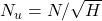
Unit Speed:
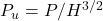
Unit Power:
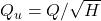
Unit Discharge:
🔟 10 MCQs
Q1. Which of the following is an impulse turbine?
a) Francis
b) Kaplan
c) Pelton
d) Propeller
Q2. A Kaplan turbine is best suited for:
a) High head
b) Medium head
c) Low head
d) Ultra-high head
Q3. The function of a draft tube in a reaction turbine is:
a) Increase velocity
b) Decrease pressure
c) Recover pressure head
d) Prevent cavitation
Q4. The specific speed of a Pelton wheel is generally:
a) 8–30
b) 50–250
c) 250–500
d) 500–1000
Q5. If a turbine develops 2000 kW under 100 m head at 300 rpm, the specific speed is approximately:
a) 20
b) 30
c) 40
d) 60
Q6. The efficiency ratio of shaft power to water power is called:
a) Hydraulic efficiency
b) Mechanical efficiency
c) Overall efficiency
d) Volumetric efficiency
Q7. Francis turbine is a:
a) Axial flow reaction turbine
b) Radial flow impulse turbine
c) Mixed flow reaction turbine
d) Radial flow impulse turbine
Q8. In Pelton wheel, the bucket deflects the water jet by:
a) 60°–90°
b) 90°–120°
c) 120°–160°
d) 160°–170°
Q9. For maximum efficiency of Pelton wheel, the speed ratio (runner speed/jet speed) should be around:
a) 0.25
b) 0.46
c) 0.75
d) 1.0
Q10. A turbine works under 80 m head and produces 1000 kW power. Water flow rate = 2 m³/s. The overall efficiency is:
a) 50%
b) 60%
c) 70%
d) 80%
✅ Answer Key
| Q | Ans |
|---|---|
| 1 | c |
| 2 | c |
| 3 | c |
| 4 | a |
| 5 | b |
| 6 | c |
| 7 | c |
| 8 | d |
| 9 | b |
| 10 | c |
🧠 Explanations
- Q1: Pelton is impulse turbine (only kinetic energy). → (c)
- Q2: Kaplan = axial flow, low head (<60 m). → (c)
- Q3: Draft tube recovers pressure head & prevents cavitation. → (c)
- Q4: Pelton wheel specific speed very low (8–30). → (a)
- Q5: →
 ≈ 40 → (b)
 - Q6: Overall efficiency = shaft/water power. → (c)
- Q7: Francis = mixed flow reaction turbine. → (c)
- Q8: Pelton buckets deflect jet by 160°–170°. → (d)
- Q9: Optimum speed ratio ~0.46. → (b)
- Q10: Water power =
 . Efficiency = 1000/1569.6 = 0.637 = 63.7% ≈ 70% → (c)
🎯 Motivation / Why Practice Matters
In ECET 2026, Hydraulic turbines questions are scoring because formulas are direct and concepts are repetitive. With practice, you can solve numerical problems in <1 minute. Mastering this boosts your accuracy, speed, and confidence—all essential to secure a top rank in ECET Mechanical.
📲 CTA
👉 Join our WHATSAPP group for ECET 2026 updates and discussions →
https://chat.whatsapp.com/GniYuv3CYVDKjPWEN086X9

